Diwali e-Commerce Rush: Is Your Order Management Ready for the Surge?
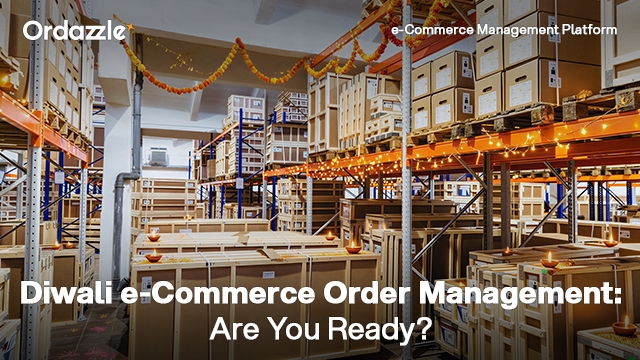
A successful Diwali campaign can bring hundreds or thousands of orders into an e-Commerce business within hours. But receiving those orders is only the beginning. Every order must be processed, matched with available inventory, assigned for fulfilment and dispatched within the promised timeline.
When order volumes rise sharply, manual processes and disconnected systems can struggle to keep up. Inventory updates may be delayed, orders can pile up for processing, and warehouse teams may find themselves working with incomplete information.
An e-Commerce order management system helps businesses handle this pressure by bringing orders from multiple sales channels into a centralised environment, supporting inventory synchronisation and automating key order-processing activities.
The question for e-Commerce businesses preparing for Diwali is whether their existing operations can handle the additional demand without compromising order accuracy or fulfilment performance.
What Happens When Diwali Orders Start Pouring In?
Imagine a fashion brand selling festive collections through its D2C website and multiple online marketplaces.
A promotional campaign goes live in the morning. By afternoon, orders have increased across every channel.
The marketing campaign is performing well, but the operations team is dealing with a different situation.
An item that sold out on one marketplace is still appearing as available on another. Warehouse staff are receiving orders faster than they can process them. Customer service teams are responding to enquiries about dispatch delays.
None of these problems necessarily originates with the sale itself. They arise because the systems responsible for managing orders, inventory and fulfilment are struggling to keep pace.
The consequences can extend beyond operational inconvenience. Overselling may lead to cancellations, delayed dispatches can affect marketplace performance, and repeated order errors can damage customer confidence.
This is why festive readiness needs to be assessed across the entire order lifecycle, rather than focusing only on website traffic or checkout performance.
Where Order Management Can Break Down During Peak Sales
A high-volume sales event places pressure on several operational processes simultaneously.
1. Orders arrive from multiple channels
Many e-Commerce businesses sell through a combination of their own websites and online marketplaces.
When each channel is managed separately, teams may need to switch between dashboards, download order information and manually consolidate records.
This becomes increasingly difficult during peak sales periods.
A multi-channel order management approach gives businesses a central view of incoming orders, reducing the need to track each sales channel independently.
It also helps operations teams identify which orders are awaiting processing, which are being fulfilled and which require attention.
2. Inventory availability changes faster than systems update
Consider a festive gift set with only ten units remaining.
If several customers place orders for the same product across different channels before inventory updates are reflected everywhere, the business may accept more orders than it can fulfil.
Overselling is particularly problematic during Diwali because customers often expect purchases to arrive before a specific celebration or gifting occasion.
Accurate e-Commerce inventory management is therefore essential.
Businesses need inventory information that reflects stock movements across connected sales channels and fulfilment locations.
An OMS integrated with inventory systems can help maintain more consistent stock availability, although the effectiveness depends on update frequency, integration reliability and how inventory is reserved.
Also read: How Festive-Ready Is Your e-Commerce, Really? 7 Operational Checks Before Peak Season
3. Order processing becomes a bottleneck
Once an order is received, several activities may need to happen before it reaches the warehouse.
The order may require validation, inventory allocation, fulfilment-location selection and status updates.
When these steps depend heavily on manual intervention, processing times can increase as order volumes rise.
Order processing automation helps reduce repetitive work by applying predefined rules to eligible orders.
This allows operations teams to concentrate on exceptions rather than handling every order through the same manual process.
4. Warehouses struggle to keep pace with incoming orders
An order can be processed successfully in the OMS and still encounter delays during fulfilment.
Warehouse teams must locate the correct products, pick them, pack them and prepare them for dispatch.
During festive sales, a sudden increase in order volume can expose gaps between order management and warehouse operations.
Connecting OMS and warehouse management processes helps businesses maintain visibility into order progress and identify delays before they affect dispatch commitments.
Can Your OMS Handle the Complete Festive Order Journey?
To understand whether an order management system is ready for Diwali, businesses should examine how an order moves through their operations.
Consider a hypothetical customer purchasing festive clothing through an online marketplace.
- 1
Order received
The order enters the central order management system from the marketplace.
- 2
Inventory checked
The system checks available stock and determines whether the order can be fulfilled.
- 3
Order allocated
The order is assigned to an appropriate fulfilment location based on configured rules and available inventory.
- 4
Warehouse processing
The order moves through picking, packing and preparation for dispatch.
- 5
Shipment and status updates
Relevant order and shipment information is communicated to connected systems.
Illustrative order journey. Actual workflows depend on the OMS, integrations and business configuration.
Each stage depends on accurate information moving between systems.
If inventory availability is incorrect, the wrong fulfilment decision may be made. If warehouse updates are delayed, customer service teams may not have reliable order-status information.
Effective order lifecycle management helps businesses track these dependencies and identify where intervention is needed.
The objective is to maintain control over the entire order journey, even when the number of transactions increases significantly.
Why Intelligent Order Management Matters During Diwali
Processing orders in the sequence they arrive may seem straightforward. In practice, fulfilment decisions can be more complicated.
An e-Commerce business might have inventory distributed across several warehouses. Some orders may have shorter delivery commitments, while others require specific handling or fulfilment arrangements.
Intelligent order management supports decisions about how orders should move through the fulfilment network.
For example, order-routing rules may consider inventory availability, fulfilment location and operational priorities when assigning orders.
This can help businesses make more consistent fulfilment decisions, particularly when multiple locations are involved.
It also reduces the need for teams to manually evaluate every eligible order.
However, automation depends on the quality of the underlying data and business rules. An automated decision based on inaccurate inventory information can still create fulfilment problems.
Before Diwali, businesses should review their routing rules, inventory accuracy and exception-handling procedures to ensure they reflect actual operational conditions.
Also read: How Automated Order Management Improves e-Commerce Operations
The Orders That Need Attention Matter Just as Much as the Ones That Don't
During peak sales, operations teams naturally focus on processing as many orders as possible.
Yet the orders that fall outside the normal workflow often require the most attention.
These may include orders with insufficient stock, incomplete information, failed allocation, unexpected status changes or delayed warehouse processing.
Without centralised visibility, such exceptions can remain unnoticed until a customer complains or a marketplace deadline approaches.
An effective order management process should help teams identify exceptions, understand their causes and assign responsibility for resolving them.
For example, if an order cannot be allocated because stock is unavailable at the intended warehouse, the team should be able to determine whether an alternative fulfilment location is suitable or whether the order requires customer communication.
Clear exception-management procedures become especially important during Diwali, when delays may leave little time for corrective action.
A Practical Diwali Order Management Readiness Checklist
Before launching festive campaigns, e-Commerce businesses should evaluate the following operational areas.
- Orders from all active marketplaces and D2C channels are visible centrally
- Inventory updates and stock reservations are tested across channels
- Order validation and processing rules have been reviewed
- Order allocation and routing rules reflect fulfilment capacity
- Warehouse teams can access accurate order information
- Exception alerts and escalation responsibilities are defined
- Shipment status updates and carrier integrations have been tested
- Peak-volume scenarios have been tested against operational capacity
The purpose of this assessment is to identify weaknesses before order volumes increase.
For instance, if inventory updates are delayed during ordinary trading periods, the problem may become more serious during a flash sale. Similarly, a warehouse already operating close to capacity may struggle with additional orders, regardless of how efficiently they are captured.
Technology readiness and operational capacity need to be assessed together.
How Ordazzle Supports e-Commerce Order Management
Managing festive demand requires coordination between order capture, inventory, warehouse operations and fulfilment.
Ordazzle's Order Management System (OMS) is designed to help e-Commerce businesses manage orders across multiple online sales channels within a connected operational environment.
Relevant Ordazzle capabilities include centralised order management, inventory orchestration, order routing and fulfilment automation. Its wider e-Commerce management platform also includes warehouse management and marketplace management capabilities.
Together, these functions can help businesses reduce reliance on disconnected order-processing activities and improve visibility into their operations.
For e-Commerce teams managing multiple marketplaces or D2C channels, the value lies in having a clearer view of incoming orders, available inventory and fulfilment progress.
The exact workflows and integrations should be evaluated against the business's sales channels, warehouse arrangements and operational requirements.
Prepare for the Orders You Want to Receive
A strong Diwali campaign can generate significant interest and increase online orders. Whether that demand translates into completed sales depends on what happens after customers click the purchase button.
Businesses need accurate inventory information, dependable order processing, clear fulfilment workflows and the ability to respond when something goes wrong.
An e-Commerce order management system can support these requirements by connecting the processes involved in managing orders across channels.
The best time to identify operational gaps is before the festive surge begins, when teams still have time to test workflows, review rules and resolve integration issues.
The goal is to make sure the business can fulfil the orders its marketing efforts generate.
Ready to manage the festive order surge?
Discover how Ordazzle OMS can help your business manage orders across sales channels, coordinate fulfilment, and maintain better operational visibility. Let’s connect!
Common Questions e-Commerce Leaders Ask
1. How does an order management system help during Diwali sales?
An order management system helps e-Commerce businesses manage higher order volumes by centralising orders, supporting inventory synchronisation and automating processing workflows. It provides visibility into order status and fulfilment progress, helping teams identify delays and operational exceptions during festive sales.
2. How can e-Commerce businesses prevent overselling during festive sales?
Businesses can reduce overselling by maintaining accurate inventory records, synchronising stock availability across sales channels and using appropriate stock reservation rules. An OMS integrated with inventory management systems can help coordinate these activities. Regular inventory reconciliation and integration testing are also important.
3. What is the difference between an OMS and a warehouse management system?
An Order Management System (OMS) manages the order lifecycle, including order capture, validation, allocation and fulfilment coordination. A Warehouse Management System (WMS) focuses on warehouse activities such as receiving, putaway, picking, packing and stock movements. When integrated, the systems help connect order decisions with warehouse execution.
4. How does order processing automation improve peak-season operations?
Order processing automation reduces repetitive manual activities by applying predefined rules to eligible orders. It can help businesses process orders more consistently, reduce manual handling and allow operations teams to focus on exceptions that require attention.
5. What should businesses check before choosing an e-Commerce order management system?
Businesses should evaluate marketplace and D2C integrations, inventory synchronisation, order-routing capabilities, warehouse connectivity, exception management, reporting and the ability to handle expected transaction volumes. They should also test how the system performs during order spikes and how it handles integration failures.