Warehouse Systems 101: Understanding Modern WMS for Efficient Fulfillment

Warehouse operations are the backbone of any product-driven business. Whether you’re running a growing D2C brand or managing a complex multi-channel setup, the way you control storage, picking, and dispatch directly impacts costs, delivery speed, and customer satisfaction.
This is where warehouse management software becomes critical. Not as a buzzword, but as a system that brings structure to what would otherwise become chaos as volumes grow.
If you’ve come across terms like WMS or warehouse systems and wondered what actually matters, this guide breaks it down in plain terms and shows how the right system transforms day-to-day operations.
Warehouse Management Software: What It Really Does
At its core, warehouse management software helps businesses control how goods move inside a warehouse, from inbound receiving to picking, packing, and dispatch.
What this really means is visibility and control. You know what’s in your warehouse, where it’s stored, and what needs to move next. Instead of relying on manual checks or spreadsheets, the system guides warehouse teams through each step with accuracy.
Modern warehouse management software replaces guesswork with real-time data, making operations predictable and repeatable even as order volumes increase.
WMS Management System: Why Growing Businesses Need One
A WMS management system acts as the operational brain of a warehouse. It coordinates people, inventory, and processes so everything moves in sync.
Here’s how it makes a practical difference:
Real-Time Visibility
A WMS management system gives live insight into stock levels, storage locations, and work-in-progress. Teams don’t waste time searching for products or reconciling mismatched data.
Faster Fulfillment
By automating picklists and task assignments, the system helps warehouse staff move faster with fewer errors. Orders flow smoothly instead of piling up during peak hours.
Controlled Growth
As order volumes rise, manual processes break down. A WMS management system absorbs this growth without forcing teams to rebuild workflows or add unnecessary headcount.
This is why businesses that plan to scale treat WMS as infrastructure, not a tool.
WMS Software and Day-to-Day Warehouse Execution
WMS software focuses on execution. It’s what warehouse teams interact with every day to get work done efficiently.
Good WMS software:
- Directs picking and packing tasks clearly
- Reduces dependency on individual experience
- Minimizes errors during high-volume periods
- Keeps every action traceable and auditable
Instead of warehouse operations depending on tribal knowledge, WMS software standardizes execution. This consistency is what allows businesses to scale without losing accuracy.
Inventory Management for Warehouse Operations
Strong inventory management for warehouse operations ensures that stock accuracy doesn’t degrade as movement increases.
Inbound stock, internal transfers, returns, and dispatches all impact inventory levels. Without system-driven updates, discrepancies pile up fast.
A well-designed warehouse system ensures inventory updates happen automatically with every movement. That accuracy feeds into fulfillment planning, replenishment decisions, and customer-facing availability.
For growing businesses, inventory management for warehouse operations becomes the difference between confident selling and constant firefighting.
Warehouse Systems That Improve Space and Labor Efficiency
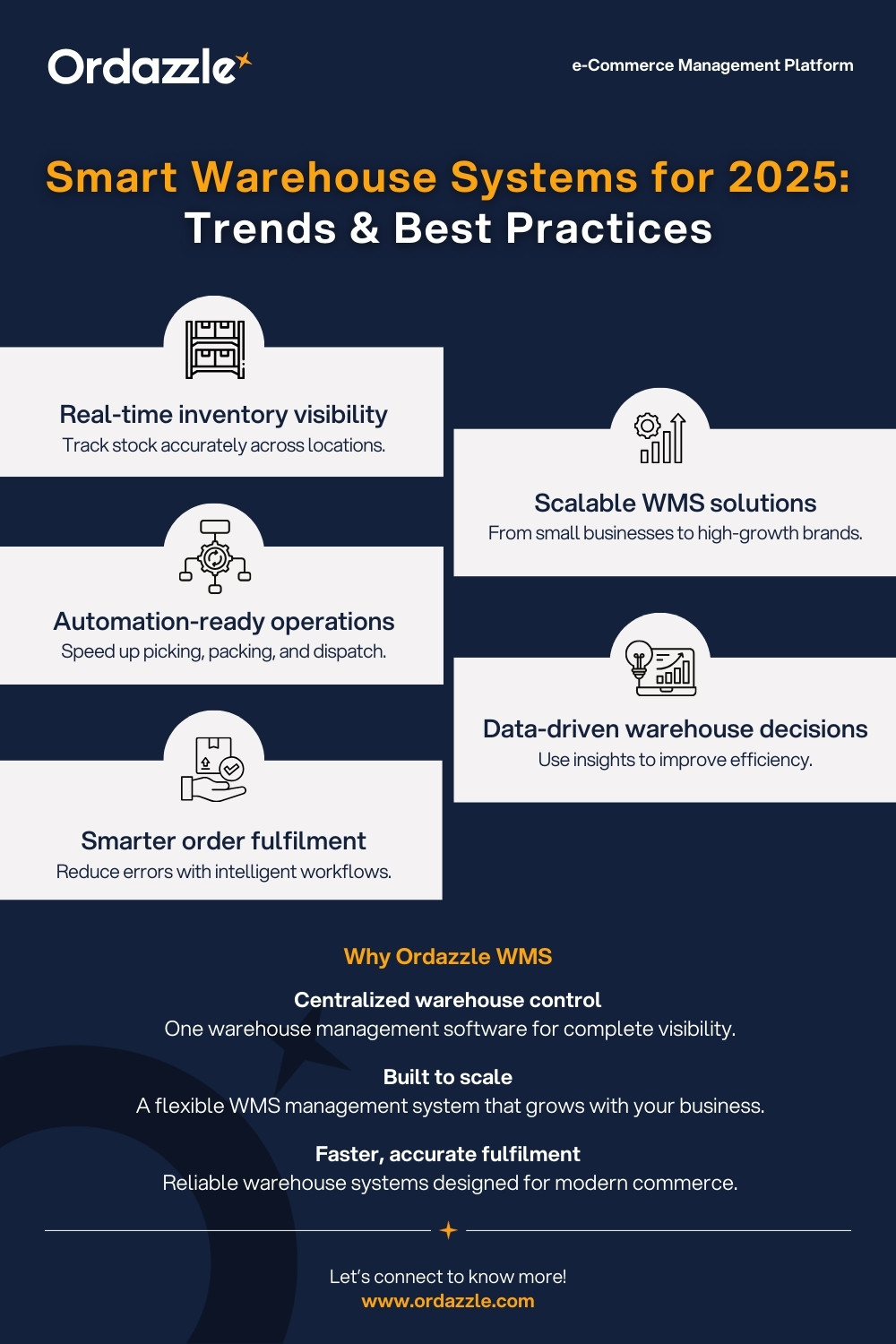
Modern warehouse systems do more than track inventory. They help businesses use space and labor more intelligently.
By organizing stock based on demand patterns and movement frequency, warehouse systems ensure:
- Fast-moving SKUs are easy to access
- Storage space is used efficiently
- Teams spend less time walking and searching
This operational discipline reduces costs while improving throughput, especially when warehouse space is limited or expensive.
Warehouse Management Software for Small Business
There’s a common myth that warehouse management software small business setups don’t need sophisticated systems. In reality, small businesses benefit the most from structure early on.
Ordazzle’s approach supports small businesses by:
- Starting with simple, guided workflows
- Reducing manual errors from day one
- Scaling seamlessly as order volumes grow
Instead of switching systems every few years, small businesses can grow into a platform that’s built for expansion.
Warehouse management software for small businesses isn’t about complexity. It’s about clarity and control from the start.
How Ordazzle’s Warehouse Management Software Stands Out
Ordazzle’s warehouse management software is built for businesses that want operational control without unnecessary complexity.
Rather than treating warehousing as a standalone function, Ordazzle connects warehouse execution directly with inventory and fulfillment workflows.
Automated Picking and Packing
Ordazzle’s WMS software generates system-driven picklists and optimized picking paths. Warehouse teams spend less time navigating and more time fulfilling orders accurately.
Real-Time Warehouse Visibility
Supervisors get live dashboards showing inbound processing, picking progress, packing status, and dispatch readiness. Bottlenecks don’t stay hidden, they’re visible as they form.
Smart Storage and Inventory Flow
Ordazzle supports zone-based storage visibility, helping businesses place inventory based on demand velocity. This keeps operations lean and responsive even during peak periods.
Simplified Inbound and Returns
Inbound receiving, put away, and returns processing follow structured, mobile-friendly workflows. Stock becomes available faster, errors reduce, and returns don’t clog operations.
Warehousing as Part of a Unified Commerce Flow
Ordazzle’s warehousing management doesn’t operate in isolation. Inventory updates flow seamlessly across systems, ensuring warehouse activity aligns with orders and fulfillment commitments.
What this really means is fewer handoffs, fewer mismatches, and far less manual reconciliation.
Choosing the Right Warehouse Management Software
When evaluating warehouse management software, growing businesses should look beyond features and focus on operational impact:
- Real-time inventory and task updates
- Guided pick and pack workflows
- Scalability without process rebuilds
- Clear operational visibility
- Easy adoption for warehouse teams
Ordazzle checks these boxes with a cloud-native WMS management system designed for modern fulfillment environments.
Final Thoughts
Warehouse management software is no longer optional. It’s a strategic foundation for businesses that want to scale without losing control.
The right WMS software brings predictability to warehouse operations, reduces costly errors, and gives teams the confidence to handle higher volumes and tighter delivery promises.
Ordazzle’s warehousing management capabilities help businesses move faster while staying accurate. With real-time visibility, structured workflows, and scalable execution, warehousing stops being a bottleneck and becomes a competitive advantage.
If your business is preparing for growth, tighter SLAs, and smarter inventory decisions, Ordazzle’s warehouse management system is built to support that journey with clarity and control. Let’s talk
Frequently Asked Questions
Which software is best for warehouse management?
The best warehouse management software is one that matches your order volumes and operational complexity while offering real-time visibility and automation. A scalable WMS management system like Ordazzle helps businesses manage inventory accurately, execute faster fulfillment, and grow without operational friction.
What features should the best warehouse management software include?
The best warehouse management software should offer real-time inventory tracking, automated picking and packing, clear warehouse systems visibility, and scalability. These features ensure inventory management for warehouse operations stays accurate and efficient as demand increases.
Why do businesses need warehouse management software?
Businesses need warehouse management software to reduce manual errors, speed up fulfillment, and maintain accurate inventory control. A reliable WMS software replaces spreadsheets with structured workflows that support growth without chaos.
What industries use WMS software systems?
WMS software is widely used in retail, e-commerce, manufacturing, logistics, and distribution industries that manage physical inventory. Both enterprises and teams adopting warehouse management software small business solutions use warehouse systems to improve accuracy, efficiency, and fulfillment speed.