How AI Can Help Optimise Inventory Turnover in e-Commerce and Retail
Some products sell out within hours, while others remain in storage for months despite discounts and promotions. The difference often comes down to how effectively a business manages its inventory.
For modern retailers, inventory turnover is one of the most important indicators of operational efficiency. It reveals how quickly inventory is sold and replenished, helping businesses optimise purchasing, reduce excess stock, improve cash flow, and increase profitability.
Managing inventory manually across multiple warehouses, online stores, and marketplaces has become increasingly difficult. That's why many retailers are adopting an e-Commerce inventory management system powered by Artificial Intelligence (AI) to automate forecasting, inventory planning, and replenishment.
An AI-powered e-Commerce inventory software solution helps businesses predict demand, monitor inventory in real time, identify anomalies, and maintain optimal stock levels across every sales channel.
In this blog, we'll explore what inventory turnover is, why it matters, and how AI-powered inventory management can help retailers optimise inventory turnover and improve business performance.
What is Inventory Turnover?
Inventory turnover measures how many times inventory is sold and replaced during a specific period.
It is one of the most important KPIs for retailers because it reflects how efficiently inventory is managed and how well products move through the supply chain.
A high turnover ratio generally indicates healthy demand and efficient inventory management, while a low ratio may suggest overstocking, poor demand forecasting, or slow-moving inventory.
Also read: How Centralized e-Commerce Inventory Management Simplifies Operations
Inventory Turnover Formula
Inventory Turnover = Cost of Goods Sold (COGS) ÷ Average Inventory
Businesses can also calculate inventory turnover using sales revenue depending on reporting requirements, although COGS typically provides a more accurate measure.
Why Inventory Turnover Matters
Inventory turnover influences nearly every aspect of retail operations, including:
- Purchasing decisions
- Supplier planning
- Pricing strategies
- Warehouse efficiency
- Working capital
- Customer satisfaction
Using an AI-powered e-Commerce inventory system enables businesses to continuously monitor turnover and adjust inventory levels proactively.
Good vs. Poor Inventory Turnover Ratio
Although ideal turnover varies by industry:
- High turnover usually indicates efficient inventory movement and healthy sales.
- Low turnover may indicate excess inventory, declining demand, or inaccurate forecasting.
Retailers should aim for balanced turnover—high enough to avoid unnecessary holding costs but sufficient to prevent stockouts.
Why Inventory Turnover is Critical for e-Commerce& Retail
Inventory turnover directly impacts profitability and operational efficiency.
Cash Flow Optimisation
Selling inventory faster frees up working capital that can be invested in new products, marketing, or business expansion.
Reduced Holding Costs
Lower inventory levels reduce storage, insurance, depreciation, and warehouse costs.
Better Customer Satisfaction
Maintaining the right inventory levels ensures products remain available, reducing cancelled orders and improving customer experiences.
Faster Inventory Movement
Optimised turnover keeps inventory moving efficiently through warehouses and fulfilment centres.
Improved Business Profitability
Better inventory planning reduces markdowns, minimises waste, and improves overall profit margins.
Common Challenges Affecting Inventory Turnover
Many retailers struggle with inventory turnover because of operational inefficiencies.
Demand Forecasting Errors
Inaccurate forecasts often lead to overstocking or stock shortages.
Overstocking & Stockouts
Holding excess inventory ties up capital, while insufficient inventory results in lost sales.
Slow-Moving Inventory
Products with declining demand occupy valuable warehouse space and reduce inventory efficiency.
Poor SKU Visibility
Without centralised inventory visibility, businesses struggle to track stock across warehouses, stores, and marketplaces.
Manual Inventory Planning
Spreadsheet-based inventory management increases errors and delays decision-making.
Supply Chain Disruptions
Supplier delays and logistics issues can significantly impact inventory availability and turnover.
How AI Helps Optimise Inventory Turnover
Artificial Intelligence transforms inventory management by enabling automation, predictive analytics, and real-time decision-making.
1. AI-Powered Demand Forecasting
AI analyses historical sales, customer behaviour, seasonality, promotions, and market trends to generate highly accurate demand forecasts.
This enables retailers to maintain optimal inventory levels while reducing stockouts and excess inventory.
2. Automated Inventory Classification
AI automatically categorises products based on:
- Sales velocity
- Profitability
- Demand patterns
- Inventory turnover
This allows retailers to prioritise high-performing SKUs and improve inventory allocation.
3. Real-Time Inventory Visibility
Modern e-Commerce inventory management software provides real-time visibility into inventory across warehouses, stores, marketplaces, and fulfilment centres.
Retailers can monitor inventory movements instantly, reducing discrepancies and improving fulfilment accuracy.
4. Intelligent Inventory Replenishment
AI continuously monitors inventory levels and automatically recommends or triggers replenishment based on demand forecasts, supplier lead times, and safety stock thresholds.
This reduces manual intervention while ensuring optimal stock availability.
5. AI-Based Inventory Optimisation
AI evaluates thousands of inventory variables simultaneously to recommend the ideal stock levels for every SKU and location.
This helps retailers balance inventory investment with customer demand.
6. Predictive Analytics for Seasonal Demand
AI detects seasonal buying patterns, promotional spikes, and recurring demand cycles.
Retailers can prepare inventory in advance for holidays, sales events, and peak shopping seasons.
7. Inventory Anomaly Detection
AI identifies unusual inventory behaviour such as:
- Unexpected sales spikes
- Inventory discrepancies
- Overstock risks
- Shrinkage patterns
- Abnormal stock movements
Early detection allows businesses to take corrective action before problems impact revenue.
Also read: How AI Anomaly Detection Enhances e-Commerce Management Systems
Benefits of AI-Driven Inventory Management
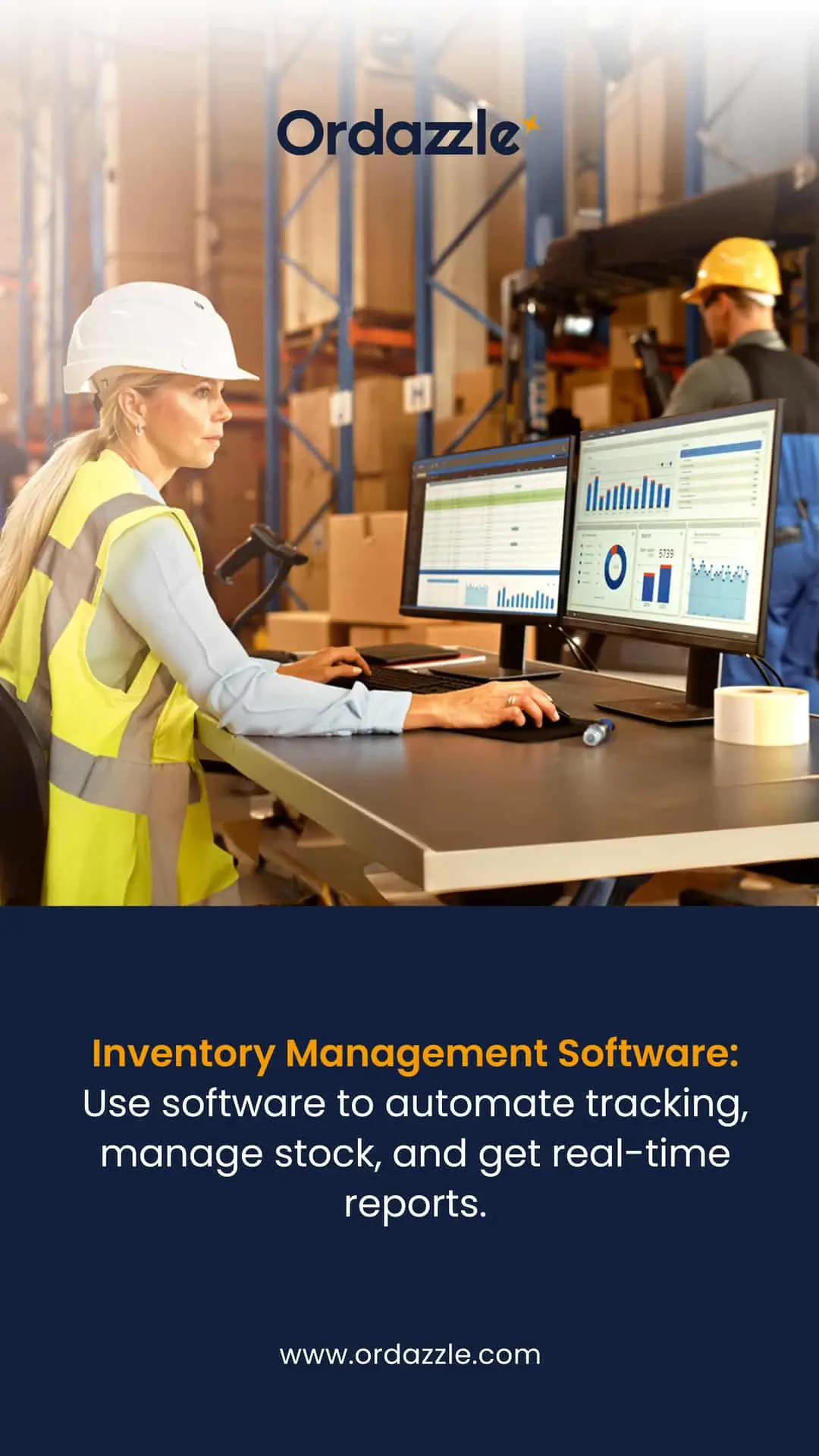
Implementing AI-powered inventory management software for e-Commerce delivers measurable business benefits.
- Reduced stockouts
- Lower inventory carrying costs
- Improved inventory accuracy
- Faster data-driven decisions
- Better warehouse productivity
- Higher inventory turnover ratios
- Improved customer satisfaction
- Increased profitability
Key Inventory Metrics to Monitor
Tracking the right KPIs helps businesses continuously improve inventory performance.
Inventory Turnover Ratio
Measures how quickly inventory is sold and replenished.
Sell-Through Rate
Indicates the percentage of inventory sold within a specific period.
Days Sales of Inventory (DSI)
Measures the average number of days inventory remains in storage before being sold.
Stockout Rate
Tracks how frequently products become unavailable.
Fill Rate
Measures the percentage of customer orders fulfilled without delays.
Inventory Carrying Cost
Calculates the total cost of storing and maintaining inventory.
Best Practices for Improving Inventory Turnover
Retailers can improve inventory turnover by following these best practices:
- Forecast demand regularly using AI
- Monitor slow-moving SKUs
- Automate inventory replenishment
- Maintain appropriate safety stock
- Centralise inventory across stores, warehouses, and marketplaces
- Use real-time analytics for faster decision-making
- Review inventory KPIs frequently
How Ordazzle Helps Improve Inventory Turnover
Ordazzle is an AI-powered e-Commerce inventory management system designed to help retailers optimise inventory across every sales channel.
With Ordazzle, businesses gain complete visibility into inventory while automating forecasting, replenishment, and inventory optimisation.
Key capabilities include:
AI-Powered Inventory Management
Leverage AI to forecast demand, optimise inventory levels, and reduce excess stock.
Unified Inventory Visibility
Monitor inventory across warehouses, retail stores, online marketplaces, and e-Commerceplatforms from a single dashboard.
Also read: e-Commerce Order Fulfillment Challenges and How Ordazzle Solves Them
Intelligent Order Management System (OMS)
Route orders intelligently based on inventory availability, location, and fulfilment rules.
Automated Replenishment
Automatically generate replenishment recommendations using AI-driven demand forecasts.
Inventory Analytics
Track inventory turnover, stock ageing, SKU performance, and inventory health through advanced analytics.
Marketplace & ERP Integrations
As a comprehensive marketplace inventory management software, Ordazzle integrates seamlessly with marketplaces, ERP systems, warehouses, and logistics providers to ensure accurate inventory synchronisation across all channels.
Whether you're managing one warehouse or multiple fulfilment centres, Ordazzle's AI-powered e-Commerce inventory software helps improve inventory turnover while reducing operational costs and enhancing customer satisfaction.
Conclusion
Inventory turnover is much more than a financial metric—it reflects how efficiently your retail business manages inventory, serves customers, and generates profit.
As retail operations become increasingly complex, AI has become essential for improving inventory turnover through intelligent forecasting, automated replenishment, real-time visibility, and predictive analytics.
By implementing an AI-powered e-Commerce inventory system like Ordazzle, businesses can reduce operational costs, improve inventory accuracy, increase inventory turnover, and deliver exceptional customer experiences across every sales channel. Let’s connect!
Common Questions e-Commerce Leaders Ask
What is Inventory Management and Integration Solutions?
Inventory Management and Integration Solutions are software platforms that centralise inventory data and connect it with e-Commerce stores, marketplaces, ERP systems, warehouses, and logistics partners. These solutions provide real-time inventory visibility, automate stock updates, improve order fulfilment, and streamline inventory management across all sales channels.
What are the benefits of using AI-powered inventory management systems in retail?
AI-powered inventory management systems help retailers forecast demand more accurately, automate replenishment, optimise inventory levels, reduce stockouts, minimise overstocking, improve inventory accuracy, enhance warehouse efficiency, and increase overall profitability.
How can I choose the best inventory management system for my online store?
When selecting an inventory management system, look for features such as AI-powered demand forecasting, real-time inventory visibility, automated replenishment, marketplace integrations, ERP connectivity, analytics dashboards, scalability, and support for multi-channel retail operations.