Multi Channel e-Commerce Platform: Benefits & Guide
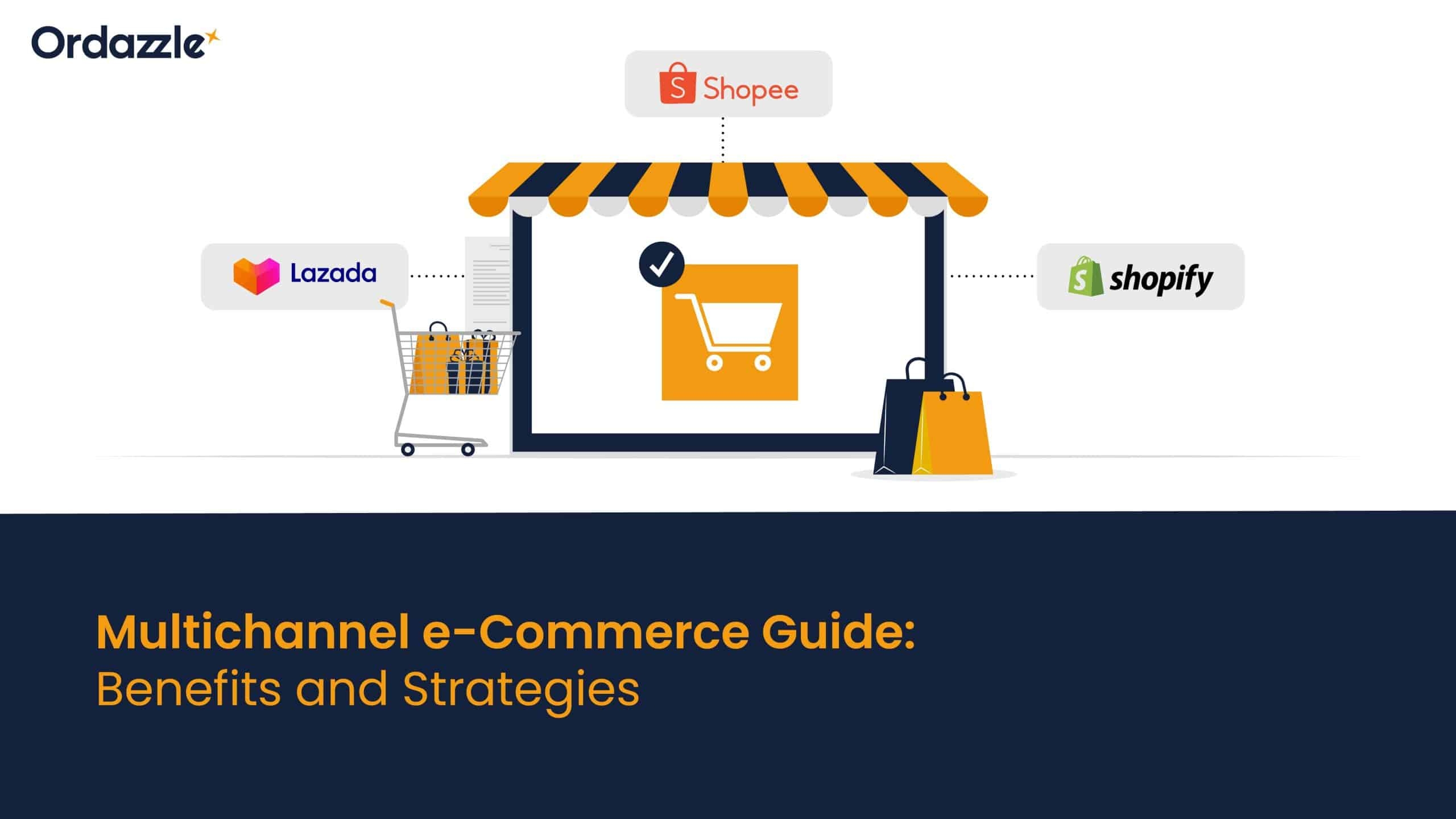
Let’s face it: the key to successful retail is to engage your customers wherever they are—web, mobile, in-store, etc.
In summary, around 60% of consumers buy a product after encountering it on social media, while approximately 50% use a search engine to find a new product.
In a nutshell, it’s critical to diversify how you reach, engage, and sell to your customers. There’s no one-fits-all approach to it; you learn what works best for your audience and brand as you execute your approach.
However, it’s best to optimise your sales with a multi-channel e-Commerce strategy to maximize your reach.
This guide will give you a deeper understanding of omni-channel management and multichannel selling. Read on.
What is multichannel e-Commerce?
As the name suggests an end-to-end business strategy that involves multiple channels to interact and sell to customers.
From brick-and-mortar stores to telephonic sales, e-Commerce platforms, social media, and mobile apps, it encompasses many methods, both traditional and modern.
The core of this strategy is to provide your customers with multiple touch points to interact with your brand, helping build satisfaction and loyalty.
Here are some examples of different sales channels:
- Online platforms
- Brick-and-mortar stores
- Mobile apps
- Social media
- Sales events
- Affiliate networks
- Responsive websites
- Distribution partners
Why should you invest in multichannel e-Commerce?
Multichannel e-Commerce management can significantly boost your sales results and marketing positioning, not to mention make you a favorite among customers and get to know more about omnichannel e-Commerce
Here’s why the multichannel approach is a key strategic move for your business:
1. Increased reach and availability
Consumers today are constantly connected to the internet via various devices. Hence, being present everywhere is a necessity.
When you adopt the multichannel approach, you become reachable to a wider audience and tap into market segments previously inaccessible.
You can also interact with customers in times and places convenient for them, increasing chances of interaction, engagement, and, ultimately, conversions.
2. Improved customer experiences
Multichannel e-Commerce allows you to create comprehensive and consistent shopping experiences for your customers.
For instance, customers can start the purchase process in one channel, like browsing a website, continue in another (using an app for customer service), and finish the transaction in another channel (collecting from a physical store).
This flexibility allows customers to interact with your brand with ease, increases satisfaction levels, and builds a positive brand image.
Also Read: Unlocking Performance and Efficiency with Ordazzle
3. Better sales and revenue
With your brand presence spread across multiple channels, you can achieve significant revenue growth because you can reach more customers. Moreover, multichannel customers tend to make purchases more frequently.
Also, multichannel capabilities make it easy for the customer to move seamlessly between channels, reducing barriers that could impede a transaction.
Effective ways to do multichannel e-Commerce
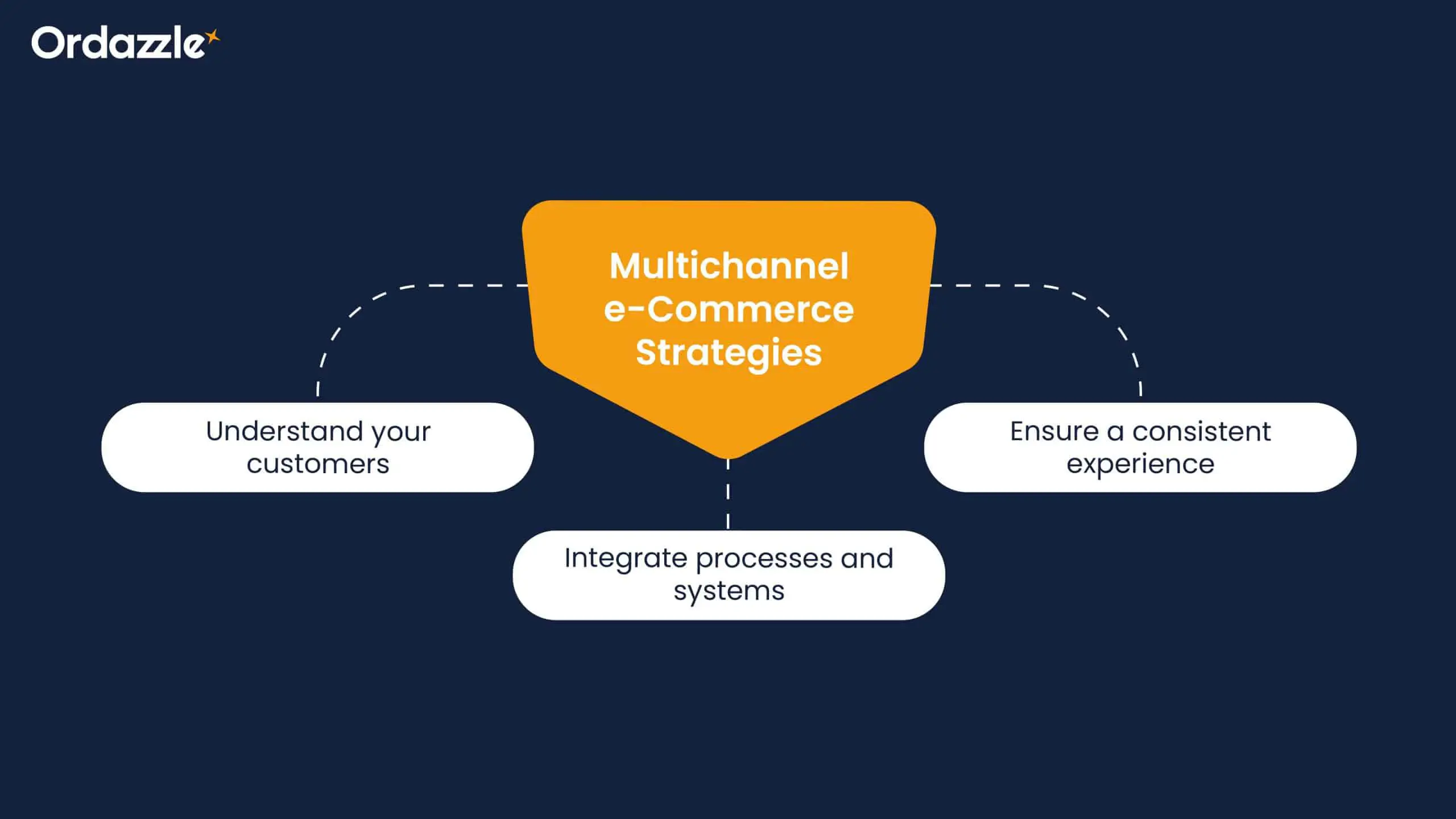
To make the most of multichannel e-Commerce, here are some tried-and-tested strategies you can execute:
a. Understand your customers
Like any marketing or sales strategy, the foundation of multichannel selling is an in-depth understanding of customer preferences, behaviour, and purchase paths. For this, you will require proper collection and analysis of data garnered from various touchpoints.
By leveraging advanced analytical tools, you can create detailed buyer profiles and map their purchase journeys to potential customers. This way, you can personalise offers and adapt communication strategies to the needs of different customer types.
b. Integrate processes and systems
An integrated technological ecosystem is a key element of any multichannel e-Commerce strategy. To create such an interoperable setup, you must invest in modern channel management systems that allow smooth data flow between disparate systems.
A cross-channel e-Commerce platform is important to this effort, as it is not limited to just online sales but also integrates with other sales channels. Pick a solution that provides flexibility to help you adapt to changing business needs and easily integrates with other platforms.
c. Ensure a consistent experience
Consistency in customer service quality, product offering, and brand communication across all channels is imperative for building customer loyalty and trust.
Technical infrastructure is just one aspect of achieving this. Consistent staff training and strategy are equally important.
For starters, employees should have access to previous customer interactions with your brand. This will help them create personalized communication and experience journeys that keep the customers coming back.
Get ahead with Ordazzle’s Omni-channel Management Syste
For e-Commerce brands, investing in new sales channels, especially in the online space, can help you increase reach, improve revenues, and elevate customer experiences.
The key to creating such an engine of success is to have a deep understanding of the customer and the right technology to leverage the insights gained.
We at Ordazzle help companies make the most of cross-channel possibilities with our state-of-the-art multichannel e-Commerce platform. Book your DEMO today.
Common Questions e-Commerce Leaders Ask
How can a multi channel e-Commerce platform simplify managing multiple sales channels?
A multi channel e-Commerce platform can centralise key e-Commerce operations, helping businesses manage multiple sales channels more efficiently while reducing manual work and operational complexity.
What should businesses consider before choosing a multi channel e-Commerce platform?
Businesses should consider channel integrations, inventory visibility, order management, scalability, automation capabilities, and the ability to maintain consistent customer experiences across different sales channels.
How does channel management software help businesses scale across e-Commerce channels?
Channel management software helps businesses streamline operations across multiple channels by connecting systems, reducing repetitive tasks, improving data consistency, and providing greater visibility into channel performance.